5 Ways Wyoming Can Reform Teacher Education
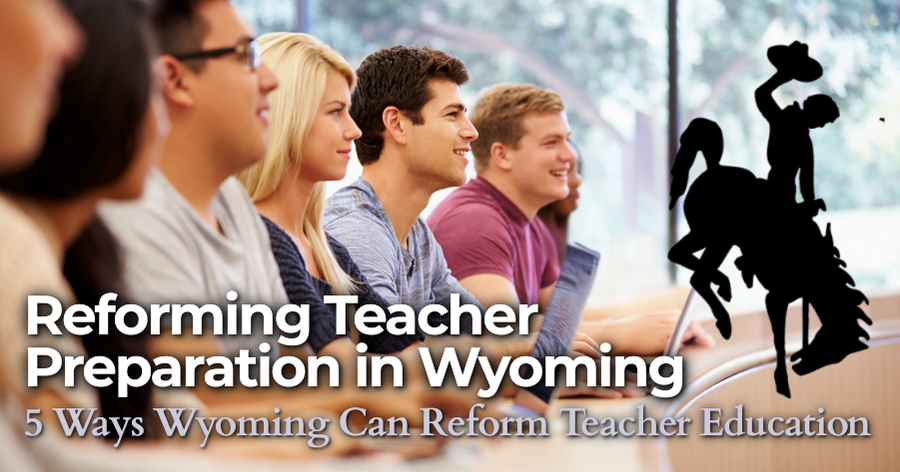
With so many aspects of Wyoming’s education system needing reform, the scope of challenges can feel overwhelming. However, one strategic place to begin is at the root: the University of Wyoming’s College of Education.
By strengthening the foundation of teacher preparation programs, we can cultivate more well-rounded, knowledgeable, and competent educators, setting the stage for lasting improvements in K–12 student success.
Educators who are deeply grounded in core disciplines like math, science, English, and history shape the trajectory of entire communities. When teachers are well-prepared, they help ensure that future generations of Wyomingites—from ranchers and farmers to doctors and lawyers—have the skills needed to navigate life with confidence and competence.
By investing in teacher training at the University of Wyoming, we lessen the pressure on local school systems to depend exclusively on state standards and bureaucratic mandates to guarantee teacher performance. Effective teachers can deliver meaningful instruction and foster higher academic achievement without being constrained by checklists or excessive testing requirements.
The James G. Martin Center for Academic Renewal published the Blueprint for Reform: Teacher Preparation, which highlights these issues within higher education and outlines actionable steps for improvement. By applying these recommendations at the University of Wyoming’s College of Education, we can better prepare future teachers and ultimately strengthen outcomes for K–12 students across the state.
Below are five ways Wyoming can reform teacher preparation:
1. Return to the Basics: Build Phonemic Awareness and Phonics
Phonemic awareness—the ability to hear, identify, and manipulate sounds in spoken words—is the first step in learning to read. Once children master this skill, they can progress to phonics, where letters and groups of letters are connected to sounds and used to decode words. Together, these skills give children the tools to “crack the code” of written language, laying a strong foundation early in their learning journey. Applying these concepts has been repeatedly proven as one of the most effective methods for learning to read.
Unfortunately, many Wyoming students are not benefiting from these proven methods. According to the 2024 National Assessment of Educational Progress (NAEP), literacy rates in the state continue to decline. Thirty-two percent of students read below the basic level—meaning nearly one in three Wyoming students cannot read at grade level. Only 27 percent demonstrate proficiency, and just 9 percent achieve advanced reading skills.
These sobering statistics highlight a critical need: educators must be trained to teach reading using proven, research-backed methods—beginning with phonemic awareness and continuing through systematic phonics. By equipping teachers with the skills to build strong literacy foundations, we give students a greater chance at long-term academic success.
While Wyoming students score slightly above the national average in English on the NAEP assessment, the difference is small. Nationally, 40 percent of students perform below the basic level of proficiency, and Wyoming’s results are only marginally better. These numbers are daunting, reflecting a nationwide literacy crisis in which our state is far from immune.
Language proficiency is the cornerstone of student success. To master subjects like math, science, and social studies, students must first be able to read, write, and comprehend effectively. In the American education system, logic, reasoning, and comprehension are cultivated through English. Without strong literacy skills, students risk falling behind not just in English, but across every area of learning.
One factor contributing to Wyoming’s literacy challenges may be the inconsistent or insufficient emphasis on teaching phonemic awareness in our schools.
The National Council on Teacher Quality (NCTQ) reviewed the University of Wyoming’s teacher preparation programs and found that, while four of the five core components of the science of reading are covered, phonemic awareness—the ability to hear and manipulate sounds in spoken words—is not addressed adequately. This omission is critical, since phonemic awareness is a foundational skill for early reading success.
Some attribute the gap to the growing burden of state-mandated standards and regulations. With so much content, compliance, and assessment to manage, essential instructional skills—like phonemic awareness and phonics—are too often sidelined. The result is that new teachers enter classrooms less prepared to help students master reading.
To reverse this trend, the University of Wyoming should take proactive steps to reintegrate phonemic awareness into its curriculum. This would include offering a dedicated course in the science of reading and ensuring that all elementary education teacher candidates are equipped with the tools they need to teach reading effectively from day one. By doing so, Wyoming can strengthen early reading outcomes and reduce the long-term costs of remediation in its schools.
2. Strengthen Core Content Knowledge
Strengthening reading instruction is the first step, but it cannot stand alone. Teachers must also have a solid grounding in core academic subjects to help students connect what they read to the broader world. Without strong content knowledge, even the best literacy instruction falls short.
Another NCTQ report highlights gaps in the University of Wyoming’s undergraduate teacher preparation program, particularly in the core content knowledge required of candidates. The review found that essential subject areas—such as Economic Principles and Exchange, The Economy, and U.S. History: 20th Century and Beyond—are not adequately covered.
To prepare well-rounded educators, teacher training must extend beyond English, math, and science. Subjects like history, geography, and economics are equally important in shaping informed citizens and effective teachers. The University of Wyoming should require coursework in modern U.S. history and ensure stronger grounding in economics for its elementary education teacher candidates.
3. Depoliticize Teacher Preparation
Teacher education programs should eliminate politicized curriculum requirements—such as DEI-focused programming—that can divert attention from student-centered, evidence-based instruction. Wyoming is already moving away from DEI policies, and the University of Wyoming has an opportunity to align with this shift.
Concerns remain that DEI and Critical Race Theory concepts continue to influence faculty perspectives and course content at the University. To ensure Wyoming’s teachers are unbiased and focused on academic fundamentals, a re-evaluation of current teaching approaches at the University of Wyoming is warranted.
Research—including the James G. Martin Center’s comprehensive report on the politicization of education schools—shows that ideological content can narrow the focus of teacher preparation and undermine academic rigor. With the passage of HB 0147, which prohibits DEI programs and institutional discrimination in Wyoming’s public institutions effective July 1, 2025, the University should respond proactively.
A comprehensive content audit—conducted in partnership with the Wyoming Department of Education—would help ensure that teacher preparation aligns with the state’s standards and expectations for elementary education. While individual beliefs cannot—and should not—be dictated, institutional policies can be refined to keep teacher preparation centered on academic excellence, rather than on ideological trends.
4. Expand Teacher Pathways
The Praxis II examination, currently required for teacher licensure in Wyoming, does not measure mastery of the profession, but rather a minimum competency in teaching subjects. Wyoming should consider new pathways into teaching, including alternative licensure programs—or perhaps even, as some legislators have proposed, eliminating licensure altogether.
Alternative certification offers practical options. States like Florida and Michigan administer their own teacher certification exams, and the American Board provides an online pathway that has been adopted in 15 states. These models demonstrate that strong alternatives exist beyond the Praxis system.
In the 2025 legislative session, Wyoming lawmakers considered HB0100, which would allow school districts and charter schools to employ teachers without a state-issued certificate or permit, provided candidates pass a background check and meet locally established hiring policies. The bill placed full discretion in the hands of districts, without requiring a degree in education—or even a degree at all—so long as candidates could demonstrate sufficient knowledge or experience in the subject area they were hired to teach.
If Wyoming reconsiders this approach, it could significantly expand the pool of capable teachers, particularly in rural areas, and encourage districts to operate in a more free-market environment. By competing for strong educators, school systems would gain flexibility to hire the best talent available, helping to revitalize Wyoming’s education system.
5. Strengthen Accountability
The University of Wyoming’s College of Education must be held to higher standards in how it prepares future teachers. To foster meaningful change, accountability should include mandated coursework in areas such as economics, history, and the science of reading. Regular evaluations by the University’s Board of Trustees—reviewing programs and course syllabi—would help ensure alignment with best practices in literacy instruction and core content knowledge. Additionally, separating teacher preparation coursework from the broader undergraduate degree requirements could allow for a more focused, effective training experience.
As members of the Great Wyoming Family, we have a duty to steward our communities and our future well. Providing the best education to our children requires giving the best preparation to our educators. Whatever paths our students pursue as adults, they should be able to rely on the strength of a solid education—and we must ensure they receive it.
This article was written in collaboration between Wyoming Family Alliance staff and Shannon Watkins with the James G. Martin Center for Academic Renewal. The James G. Martin Center for Academic Renewal is a nonprofit institute dedicated to improving higher education policy. The Wyoming Family Alliance is an independent family policy council dedicated to defending life, advancing liberty, and preserving freedom for Wyoming families.